

In 1495, Gerrit Jansz Trip crosses the Rhine from the German town of Emmerich and settles in Bommel. He buys a house on the Kerkstraat and thereby lays the foundation for one of the most remarkable merchant families in the city. His name comes from the wooden footwear that his ancestors made and sold: trippen, clogs with a leather strap across the instep. Three of them are depicted in the family coat of arms. From shoemaker to merchant: the Trips rise quickly.
His son Jan Gerritszoon Trip is born in 1500 and spends his entire life in that same house on the Kerkstraat. He trades in timber, grain and iron. He owns a ship which he later sells in Dordrecht. He leases the ferry across the Waal, providing him with a stable income alongside his trading activities. His brothers Mattheus and Cornelis depart for Dordrecht. Jan stays. But his gaze reaches further than Bommel. Through his contacts in Emmerich, Lübeck and Amsterdam, his trading practice seamlessly connects with the Hanseatic routes that criss-cross all of Europe.
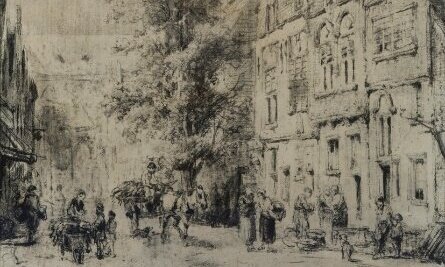
In the warehouse on the Ruiterstraat, large quantities of wood are stacked high. A substantial load of wool and a cog ship carrying planks have just arrived. Jan inspects the stock, discusses with his administrator what needs to be inspected and what is destined for the local market. Troubled times are good for the timber trade, he thinks with satisfaction. A great deal has burned down in recent years. Everything has to be rebuilt. And for building you need wood.
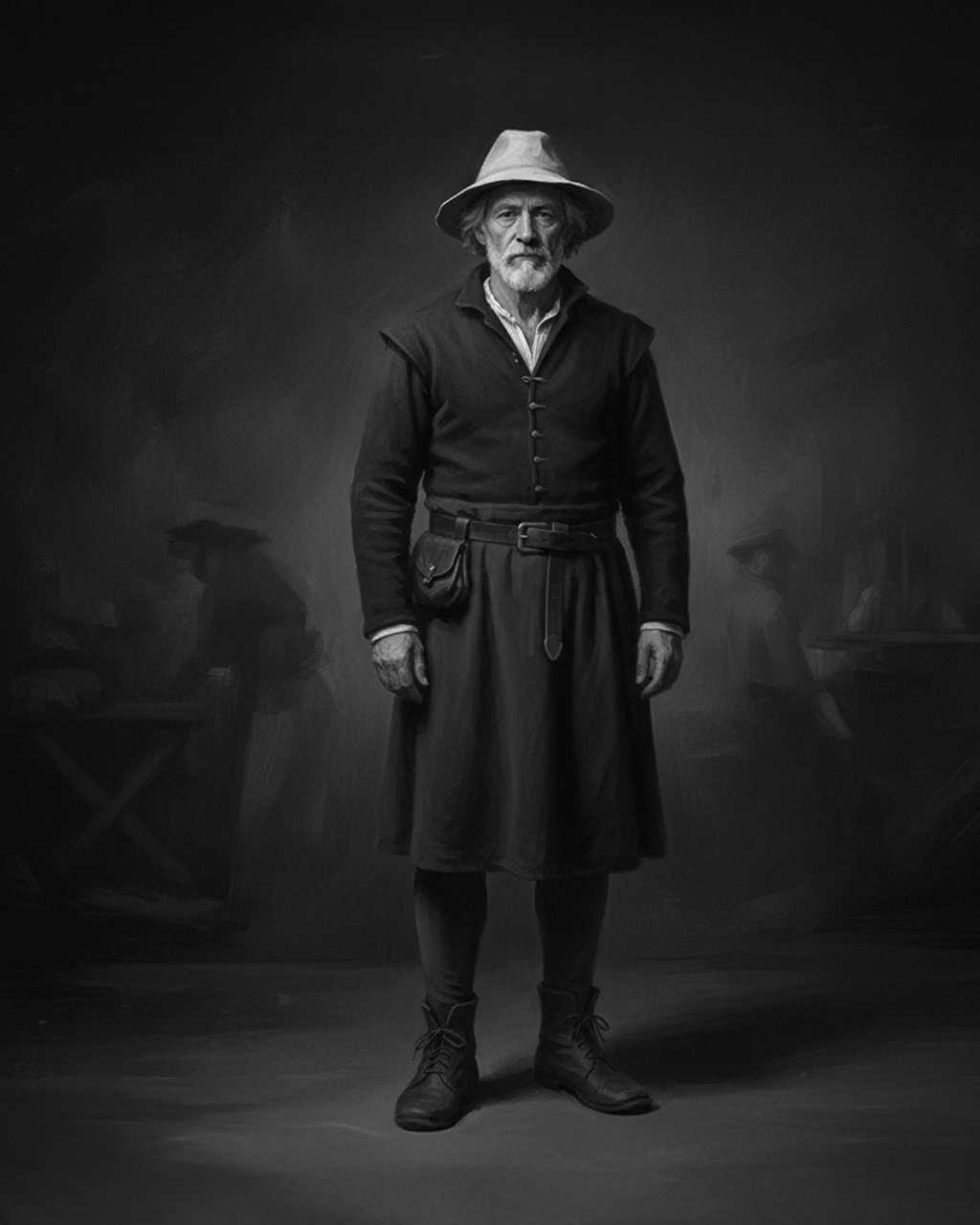
In the inn on the Market, deals are sealed. Jan takes his place at his usual table, his clerk Mattheus a step behind him with paper and lead stylus at the ready. There are stone drinking jugs on the table, bread, cheese and sausage, a bowl of roasted chestnuts. A consignment of wood is going to Dordrecht: his brothers will take it under their wing there. The agreement is drawn up neatly at home, checked over by his wife and sealed with his red seal. It is as simple as that.
For Bommel has its own currency. Even before the year 1000 the town had a mint. The Bommelaer stuivers are stable and reliable. Merchants like Jan know that a sound currency is the foundation of good trade. Without stable money there are no stable prices, and without stable prices there are no reliable agreements. Over the years, more Bommelaers have passed through Jan's hands than he could ever count.
After a workday, Jan walks back to the house that his father bought and that has since been called In de Trip. It is not the largest house in Bommel, nowhere near as imposing as the sheriff's property, but Jan is happy there. It is made of stone, solid and well situated: not too far from the mills, not too far from the warehouse, not too far from the harbour. The façade leans slightly forward, to drain the rainwater properly. The side walls and partition walls are made of stone, which makes the house particularly fire-safe.
At the back of the house, in the small hanging room built like a mezzanine above the front room, his wife sits counting money. Candles have not been lit: she is frugal. She weighs the money bags, checks the value and carefully notes down how much has been earned and how much may be spent. She calculates as well as anyone, effortlessly converts Lübeck exchange rates to Bommelaers and curbs his tendency to over-invest at exactly the right moment. He has been lucky. "If we reckon fifteen to eighteen guilders per year, the costs will precede the benefits by five years," she says without looking up. She means the cameren they want to have built, to rent out to guild members. Fixed tenants, fixed income. Jan nods. She is right. She is always right.
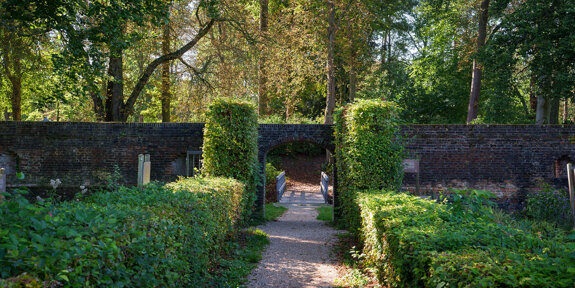
Jan's grandsons continued the work on a scale he himself could not have foreseen. His grandson Elias marries a woman from Liège from the De Geer family, wealthy iron merchants. Jacob does the same with her sister. Together, Elias and Jacob Trip become the founders of the Trippenhuis in Amsterdam, one of the most impressive merchant buildings of the Golden Age. The family also has a burial vault in the Sint-Maartenskerk in Bommel. This has been lost, but the location has remained known thanks to an old floor plan.
Jan himself dies in 1586. A family member with the same name, Jan Trip Janssen, meets a tragic fate the year before. As innkeeper of the tavern in the Korte Steigerstraat, on 4 August 1586 he refuses to serve a drunken soldier more wine. The argument gets completely out of hand. Half an hour later, Jan Trip Janssen is dead. The burial register records it simply but starkly: "stabbed and died." The city mourns. The family carries on.
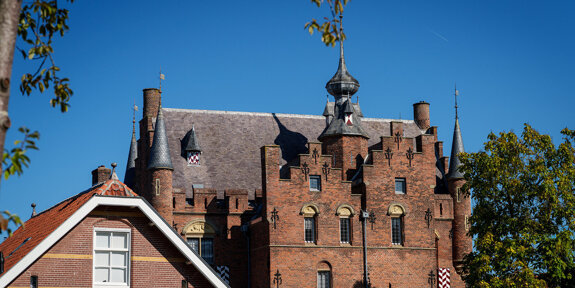
Walk through medieval Zaltbommel in the footsteps of Jan Gerritszoon Trip, merchant and skipper in the thriving Hanseatic city. Discover merchants' houses with step gables, storage cellars and shutters, the site of the former mint building and the Trip family residence on the Kerkstraat.